

Making Meetings Work: Plan With Purpose

November 4, 2025

Intentional Design vs. Going Through the Motions

Many leaders think that creating an agenda is “designing” a meeting. But intentional design is different. It’s about thinking through what people need, how outcomes will be achieved, and what structure will guide the group to progress. Done well, intentional design makes the difference between meetings that waste time and meetings that move the work (and attendees) forward.


Here are four ways to plan with purpose.

1. Start With Empathy

Most leaders begin by asking themselves, What do I want to say? What do I want to accomplish? That’s natural, but it’s also why so many meetings fall flat. The starting point should be: What does the group need from this meeting?


What do they need to hear? What are they emotionally or psychologically ready to take on? Where are they and what do they need? This is especially critical during times of change, which (let’s be honest) is basically all the time now . But it applies just as much in routine standups or one-on-ones. A meeting designed without empathy can feel rushed, irrelevant, or even unsafe. A meeting designed with empathy creates space for people to engage fully.

2. Clarify What Success Looks Like

The most common mistake leaders make when defining meeting outcomes is focusing only on what people should know by the time the meeting ends. Some go a step further and think about what people should do. But almost no one thinks about how they want people to feel. And here’s the inconvenient truth: how people feel at the end of a meeting will determine what happens next.

Without a clear idea of what you want people to know, feel, AND do, meetings are overstuffed with context, details, and noise. Again, it’s a list of topics, not an intentional, outcome-oriented discussion. A better approach is to set “Know, Feel, Do” objectives:


  • Know: the specific knowledge people should walk away with.
  • Feel: the emotional state you want to cultivate (confidence, urgency, ownership, inspiration).
  • Do: the action that should follow.


Before you send out the meeting invite, clarify your meeting’s Know/Feel/Do by finishing these three sentences:


  • At the end of the meeting, attendees will know…
  • At the end of the meeting, attendees will feel… 
  • At the end of the meeting, attendees will do…


By determining all three of these outcomes, you’ll design meetings that are focused, human-centered, and action-driven. Plus, if the meeting planning itself requires stakeholder buy-in, these statements  go a long way to getting real alignment. 

3. Sketch a Realistic Flow

Translating your outcomes into an agenda goes beyond putting together a list of activities or topics.

Take a brainstorming session as an example. If the true goal is to make a final decision, then you’re not just “generating ideas.” In reality, you need to:


  1. Generate options
  2. Agree on a prioritization framework
  3. Evaluate options against that framework
  4. Vote or align on the best choice
  5. Confirm buy-in and secure commitment


That’s a lot of steps. If you only have 30 minutes, you may need to narrow the scope: maybe end at idea generation and assign a team to develop the evaluation framework for next time. On the other hand, if you can realistically get through all those steps, you’re already well on your way to a crisp, productive meeting.


The key is to lay out every step. Start with where you want to end and work backwards to where the group actually is right now. Then allocate time thoughtfully, including room for transitions and questions. Better to design a process that fits than to overload and spill into “yet another follow-up meeting.”

4. Get Creative and Get Detailed

Once you have an overall flow for the time together, get creative with how you will spend the time to get to your outcomes. Too much time spent listening to a presentation will undercut all your thoughtfulness to this point.

For each step in your flow, consider:


  • How can I make this actually engaging?
  • If I can’t use a slide deck, how might I communicate this?
  • How can I structure the ways people will talk, write, and share?
  • Should we do this in partners or small groups before we align as a larger group?


Getting creative with the activities and design of each moment in your meeting will make sure that everyone is truly participating and getting on the same page, and not just watching you talk. The more you ask people to do something during a meeting, the more bought in they are to the follow-ups after.


Once you have your ideas, write out your detailed agenda. You want a document with a detailed play-by-play including timing, materials, and key outcomes for each segment of the agenda. Building one forces you to clarify each step and how you’ll lead the group through it. It makes you a cleaner, clearer leader.


For example, instead of improvising and rephrasing a question three different ways, you’ve already refined the wording. Instead of guessing at time management as you go, you’ve already set realistic allotments. If you’re crunched for time, even a simple guide with bullet points and time estimates helps you run a meeting with more confidence and focus. It’s a small investment that pays off in effectiveness.

From a Topic List to Real Outcomes

Although the meeting Stephanie was invited to looked organized at the outset, it wasn’t designed with intention. There were topics to discuss, but unclear desired outcomes. That’s the trap most leaders fall into, and an opportunity for you to stand out.

Plan with purpose.


For your next meeting, try to design your agenda “backwards.” Start with outcomes you want to achieve, and work your way backwards in the process until you get to where the group is now.

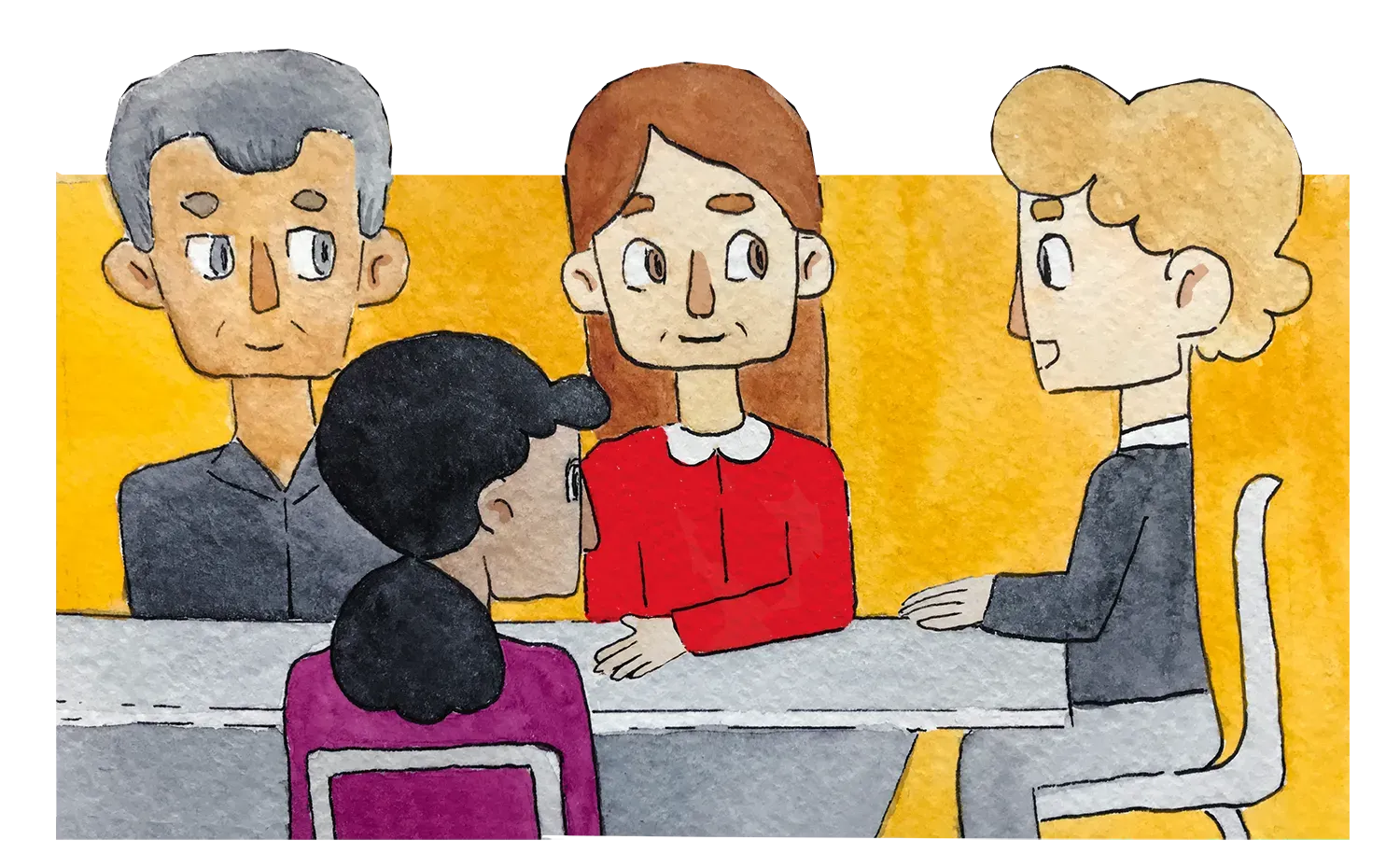
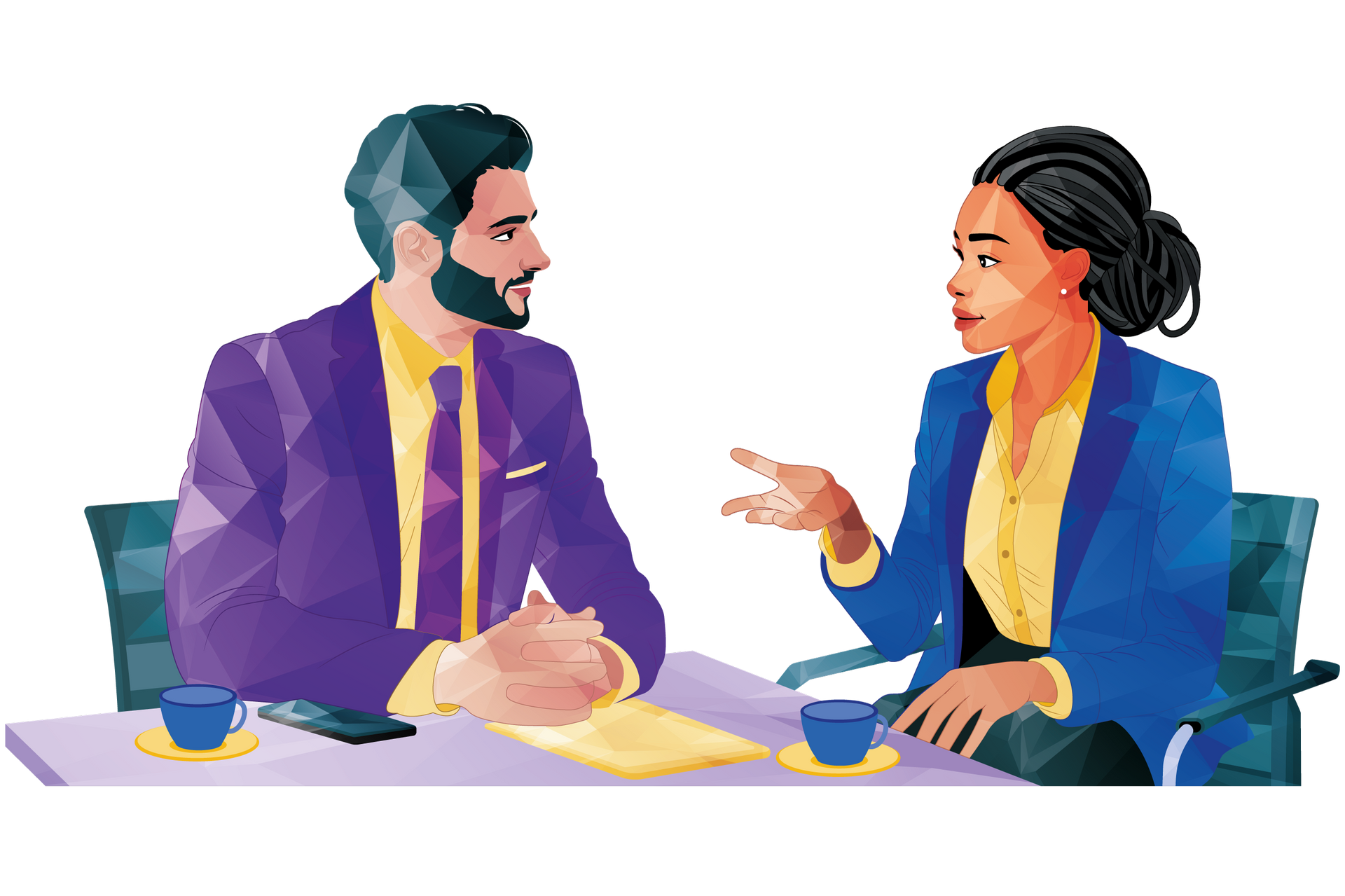
Four people seated at a table, one in purple is facing the group, the others are light-skinned and looking at him/her.


Making Meetings Work | A Practical Series for Team Leads and Managers


Most professionals spend hours each week in meetings, yet too many of those hours feel wasted. At Wolf & Heron, we believe meetings should create clarity, connection, and momentum—not frustration. This article is the first installment of a four-part series that gives team leads and managers the tools to design and facilitate meetings that actually create follow through.

Why “Organized” Meetings Still Fail

Share this article

Recent Posts

By Kara Davidson • October 5, 2026
It's never been more important to be yourself. Kara's brother learned this while hiring for his company. He was eight interviews into a search for a new position at this company, and every one of them wasn’t who they said they were on their resume. Some invented their experience. Others leaned so hard on AI that he couldn't find the actual person behind the answers. He was aggravated trying to figure out what was real and what wasn’t. All he knew for sure was that he couldn’t trust his own read, so he handed the search to a recruiter. That's what happens when people can't tell what's real. They get suspicious of everyone. And when one thing about someone seems off, we doubt the whole person: the experience, the credentials, the firm handshake.
By Stephanie Judd • September 21, 2026
Stephanie had a mentor who went straight to ‘here’s what I would do’ the moment Stepanie asked for advice. Although this mentor was extremely well-meaning, the advice she gave was irrelevant and outside of Stephanie’s reality. “Take your clients to the ballet,” she said. But Stephanie lived nowhere near a ballet company, and her clients weren’t local to her. If this mentor had just paused to ask Stephanie a few questions, her insights would have been a lot better formulated.  Most people leading a discussion default to questions that inform them rather than explore possibilities. The difference is subtle, but the impact is huge.
By Stephanie Judd • September 8, 2026
Leaders have to have all the answers, right?  Kara had a coaching client who was facing a big org change and needed to keep her people motivated. She was hyper focused on what she should say and how she’d provide her people with answers. She knew this was a critical moment for building and maintaining trust and engagement on the team. But when Kara asked, “What would you be looking for from your leader in a moment like this?” the client said, “For them to listen to me.” Then why do we try to have all the answers? Why don’t we listen?
By Stephanie Judd • August 3, 2026
Letitia came to Stephanie stressed. She ran a monthly working group and every month felt the same: low attendance, low engagement, and a Q&A section that was mostly just awkward silence. She spent hours preparing a presentation nobody seemed to care about and couldn't figure out what she was doing wrong. When Stephanie asked her to walk through the format, Letitia said they do forty minutes of presentation followed by twenty minutes of Q&A. She selected the topic each month, recruited a presenter (often herself by default because no one ever volunteered), and carried the entire session on her back. Stephanie pointed out something that surprised Letitia, even though it felt obvious to her in retrospect: the format was inadvertently creating a group of observers, not active collaborators. The meeting was designed in a way that encouraged passivity.
Show More