


Making Meetings Work: Facilitate With Flexibility

December 1, 2025

1. Don’t Rush Learning — Let Insights Breathe

Most meeting leaders cram content into every minute of the agenda, then wonder why people look overwhelmed or disengaged. Real learning or conversation doesn’t happen on command. It happens in the space between the moments you planned.


When your team has an aha moment… pause. When you ask a question and people need time to think… let them. When energy spikes around a topic… follow it instead of shutting it down to “stay on time.”


Your ability to create space for real thinking is what separates a facilitator from a timekeeper.


This is where flexibility becomes a leadership signal. You’re showing that the people in the room matter more than the clock. And when people feel that, they engage more honestly and more deeply.


If you want predictable compliance, rush. If you want true insight, adapt on the fly.

2. Choose Facilitators Based on Skill, Not Title

A manager with authority isn’t automatically a facilitator with influence.


Many meetings fail because the most senior person is asked to run the discussion even if they can’t read the room, adjust their pacing, or support divergent thinking. Facilitation is a skill, not a default privilege of title.


If the goal is alignment, decision-making, or deeper dialogue, choose someone who can:

  • Sense when the group is stuck
  • Adjust the format on the fly
  • Keep dominant voices in check
  • Amplify quieter ones
  • Navigate tension without shutting it down


You don’t need the loudest voice at the front. You need the most responsive one.

3. Plan for Transitions and Buffer Time

Most rigidity comes from unrealistic timing. Leaders plan to the minute, forgetting that humans move, ask questions, and need direction. Transitions are real, and they add up.


According to our Breakout Rules of Thumb, you can count on a couple of minutes for each transition. Build that space into your agenda so you’re not squeezing your content or your people.


And remember: every meeting should feel like a breakout. If you’re just presenting, ask yourself whether you need a meeting at all.

4. Time Questions Realistically

If you ask a room of eight people to discuss a question, expect it to take at least three to four minutes. If you ask them to reflect individually first, add more time. When dialogue is rushed, people shut down; good dialogue is designed to breathe.


Most facilitators underestimate how long high-quality thinking takes. Great facilitators design for it.

Your Agenda Is a Map, Not a Script

The goal isn’t to deliver your plan flawlessly. The goal is to move the group toward meaningful progress. Leading with awareness requires flexibility, not control.


Your agenda is a map, not a script. What will you do when the room veers off course?

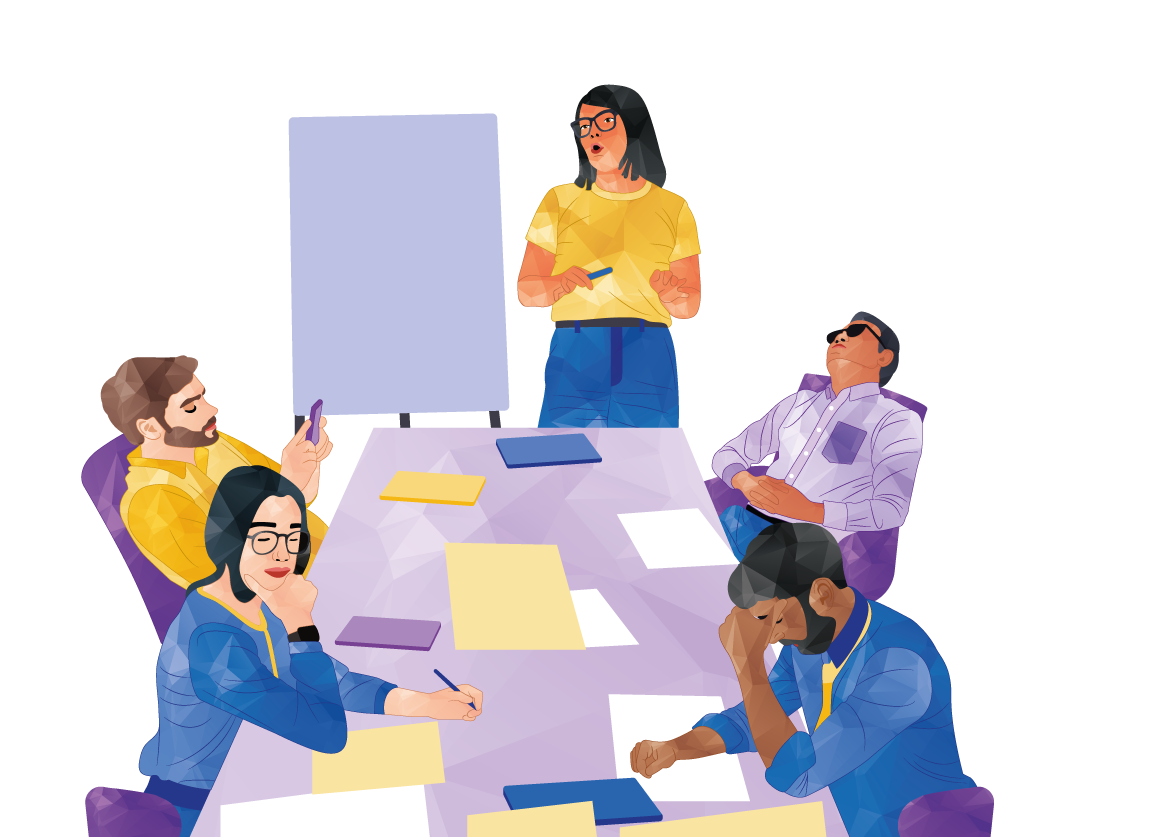
Four people seated at a table, one in purple is facing the group, the others are light-skinned and looking at him/her.

Making Meetings Work | A Practical Series for Team Leads and Managers

Most professionals spend hours each week in meetings, yet too many of those hours feel wasted. At Wolf & Heron, we believe meetings should create clarity, connection, and momentum—not frustration. This article is the third installment of a four-part series that helps team leads and managers design and facilitate meetings that actually work.

When Your Plan Meets Reality

Bonus:

Want help timing discussions and transitions? Join the Wolf and Heron Influence Library and grab all the tools from this article along with plenty more to help you grow your influence. Register for free access and check out the Breakout Rules of Thumb for tips on designing meetings that breathe.

Share this article

Recent Posts

By Stephanie Judd April 20, 2026
Stephanie was coaching a product manager at Google, Marcus, who was preparing to pitch a new health tech idea to his executives. He had done the work. The research was solid. The opportunity was real. And like many strong operators, his instinct was to lead with the facts. During his discovery process, Marcus had interviewed a nurse, Sarah, who shared something surprising: She logged into her system about 100 times per shift. Marcus dug deeper. Each login took about a minute… That’s more than an hour and a half in an 8-hour shift spent just logging in. That’s a compelling data point. But it's not enough.  Data alone doesn’t carry weight unless people feel what it means. So we worked on how he delivered it. We didn't change the numbers. We just changed the experience of hearing them.
By Stephanie Judd April 5, 2026
Stephanie was coaching a client, Lindsay, who was frustrated with one of her employees. The employee wasn’t looping in the right people at the right time. Lindsay’s conclusion was simple. “He’s just lazy. He doesn’t care if the right stakeholders are involved in the process.” So Stephanie asked her a different question. “What have you done to make him care?” She paused. “Well… I explained how important it was.”  Voila! It was clear, logical, and direct… and yet completely insufficient on its own.
By Stephanie Judd March 16, 2026
Most check-ins drift into the same tired patterns and scripts: Light chatter: “What’s going on?” Project updates: “How’s project X?” A half-hearted attempt to help: “Anything you need help on?” A vague attempt to connect: “Is there anything else on your mind that we should talk about?” Rushed, pushed or cancelled meetings Check-ins fall into these predictable habits because both parties show up and wing them. Clarity is non-existent. People don’t have a clear sense of why they’re there, what they should get out of the meeting, and how best to use the time. How often do you walk into these meetings with no agenda or sense of purpose? This is a wasted opportunity.
By Stephanie Judd March 2, 2026
Many of the people we coach are people leaders who are stressed about supporting their people in the midst of (massive) organizational change. Then pile on the fact that they’re often losing resources and being asked to do more with less. We hear comments like: I don’t know what to tell my team that will be helpful when I’m frustrated and overworked myself. Leadership just keeps asking for more. How do I keep them motivated? We don’t have any professional development money for them. These leaders think that they have to show up with the answer to everyone else’s problems. They want to be able to provide a solution that will give their teams clarity and direction. They know that’s what their people want. And yet, they’re often ignoring the most critical tool in their arsenal.
Show More